


 PDF
PDF Email
Email Print
Print
Low Self Esteem
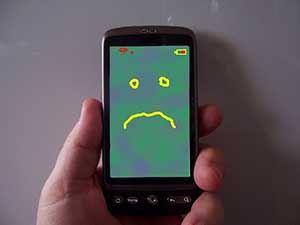
"Low self esteem makes means we view ourselves unrealistically negatively" courtesy of Ron Bennetts
Low self esteem, a cause and symptom of depression, anxiety and anger problems, has become the modern pariah.
Low self esteem, a rope that binds; preventing us pursuing our dreams and enjoying simple things that 'other people enjoy'. We talk of 'self esteem issues' and nod sagely to one another.
We use the words but do we examine what they really mean? You can't hold self-esteem in your hand or take the kids to see it on a Sunday afternoon. So, what actually is self-esteem?
Self-esteem: A Definition
Many religions' scriptures teach that pride and arrogance are terrible sins, the idea being that you can't worship yourself and a god at the same time. Supposedly, if you are 'full of yourself' you have little space for anything or anyone else.
However, real self-esteem is not arrogance or self-love or vanity.
Real self-esteem consists of:
- An appreciation of what we can do.
- An honest respect for our own abilities, potentials and value.
- Knowing our strengths and trusting in them.
- An appreciation and open acceptance of our limitations.
- An acceptance of these limitations whilst understanding that some limitations can be overcome.
- A freedom from over-concern with what we imagine others think of us whilst accepting these perceptions do play a part in everyday life but do not determine who we are.
- Having a strong sense of who we are.
The self-esteem movement and self-affirmations
I'm sure you've seen and possibly read some of the countless self help books out there. Some of these encourage us to 'love ourselves' or repeat 'positive affirmations' to ourselves everyday in order to 're-program' ourselves.
Does this work? And if it does work what does it say about human beings?
If I am a bullying, vindictive sadist would it be wrong for me to experience self reproach or even self disgust or should I just tell myself one hundred times a day I am a good human being whilst continuing in the same way?
Balance in all things
Feeling bad about aspects of our behaviour, be it selfishness, laziness, intolerance or aggressiveness is valid feedback. We can judge ourselves and feel bad about ourselves sometimes.
If I have behaved terribly then I need to feel badly about that particular time for a while but not badly about my whole identity. To state 'I am worthless to the core' on the basis of one mistake is unrealistic. Because, equally, I can find times when I have behaved decently or done well.
The essential difference
There is a difference between telling myself:
"I am a totally worthless human being, because last week I was rude to the in-laws, and that I will always be hopeless and hopeless in every area."(Low-self-esteem)
and
"I behaved really badly last night with those specific people at that specific time".
This accepts responsibility but doesn't damn one's whole personality and life as worthless. (Good self-esteem).
So we can still be self-critical and have good self-esteem at the same time. And we do this by not generalising about our mistakes and weaknesses to include everything about ourselves.
To sum up : Belief in yourself in important, but so are the skills that stop you having to work so hard at believing!
The Importance of Developing Skills as a Foundation for Good Self-Esteem
So, now we come to the crux of the matter. If I tell myself that 'everyday I am becoming more and more confident in social situations - then I go out and feel terribly shy and embarrassed, what do you think it is sensible for me to believe?
Should I believe what I have been endlessly repeating to myself, or should I believe my actual everyday experience?
If, however, someone were to come along (and I hope they do) ;-) and teach me conversational skills, relaxation techniques and thinking skills then I can start to experience feeling more comfortable socially. This lets me know that I am better socially and when I know I don't need merely to believe.
'Soft Skills' for Low Self Esteem
Learning sports, languages, practical skills like driving or carpentry can all raise a sense of competency. However handling our emotions effectively is also a skill. Emotional skills are sometimes termed as 'soft skills'. Some of these soft skills include:
- Being able to 'read' the emotions of others.
- Knowing when others are angry, upset, unsettled etc.
- Being sensitive to others whilst realising that we, too, have a position within any given situation.
- Having empathy. Being able to 'put ourselves in the position of the other person'.
- Being able to assert our point of view. When appropriate 'speaking up for ourselves' assertively.
- Having an effective communication style.
- Being able to make ourselves understood and being able to compromise to the benefit of all involved.
- Having good rapport skills and being able to forge and maintain friendships.
- Observing our own emotional ebbs and flows.
- Knowing how to manage our own anger and 'low times' so we are not swamped by our own emotions.
- Understanding our own needs for company, rest, creative stimulation, healthy lifestyle, achievable goals, attention and intimacy so that we can feel a sense of control.
- Making allowances for these needs in our everyday life.
- Having wide interests and activities (as far as possible). So we are not just 'Mother' 'Wife' 'Co-worker''Father' etc.
- Being able to manage stress in our lives-which relate to some of the above skills.
- Understanding the paramount importance of the company we keep. Do we just mix with people who bring us down or do we associate with others who are positive and fun?
A person's self-esteem seems to match the extent to which they have the above skills in place.
The Perfect Self Esteem Trap
'Heaven would be just a little better if there weren't quite so many angels playing harps.'
Of course some people do have a wide variety of skills and talents and still seem to suffer from low self-esteem! You may be a perfectionist or know somebody who is. You know the idea, 'Nothing is ever good enough'
Demanding the impossible from yourself and then falling short is obviously a trap! Knowing when we have done a 'pretty damn good job' and giving ourselves an appropriate level of credit is actually an important 'soft skill' (as is taking appropriate responsibility for our screw ups).
So, if someone wants to have perfect 'soft skills' then they need to stop talking to themselves in ways which they wouldn't even consider talking to other people.
I remember being stunned when a school friend confided to me how disappointed he was for only getting 96% in a French test. He said he 'should' have got 100%. Our teacher was pleased with him, his parents were pleased with him but, for him, the losing of that 4% made the whole exam a failure. I won't tell you what I 'achieved' in the same test but I can tell you I was pleased to have understood any of it.
It's great to have high aims and expectations for ourselves but we need to temper this with an appreciation that we are human.
Self-Esteem - A Summary
So, rather than trying to convince ourselves desperately that we are worthy of great self admiration through a series of unsubtle brainwashing, the way towards good self esteem seems to be through the development of skills, specifically the so called 'soft skills'.
When we are less self-conscious, less negatively biased and more open to our own abilities to adapt, progress and develop then we can have the spare capacity to forget about self-esteem and begin to enjoy and participate more fully in life.
These skills are what we focus on in our Free Self Confidence and Self Esteem Course and on our Self Confidence Trainer CD.


Help depressed clients quickly: Free eBook
Get '5 Things You Must Do When Treating Depressed Clients' free when you subscribe for email updates.


Article by Mark Tyrrell
Discuss self esteem on our forum
Back to Self help psychology articles
Related: Article on Self Confidence
Late Breaking News... A Startling Self Esteem Study!
A recent study into Self Esteem by the Joseph Rowntree Trust has unearthed some refreshing and helpful facts. Among them is the finding that low self esteem does not lead to delinquency, drug abuse, poor educational performance and the like.
You can learn How to Stop Anyone Smoking with Mark Tyrrell on our Smoking Cessation Training Course (online).
Back to Self help psychology articles
blog comments powered by Disqus