


 PDF
PDF Email
Email Print
PrintThe Truth About Relaxation Techniques
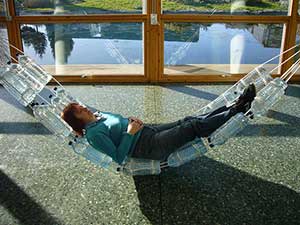
"Regular and deep relaxation is both good for the body and mental health" courtesy of Gordon Joly
We all know that relaxation techniques are all the rage - be it meditation, yoga, massage, or whatever. But how important is relaxation? And what exactly will it do for you? The answers may surprise you...
Numerous studies have shown that using relaxation techniques regularly can:
- Decrease the likelihood of heart attack and stroke, and can significantly reduce the incidence of a 2nd heart attack
- Protects you from mental health problems
- Improves your immune system function
- Aids memory and learning
- Improves your coping skills and makes you feel better!
If there's one truth about the way we live today, it's that our stress levels are higher than they were a century ago. A lot higher. And that's not because life is 'harder', but because of the type of stressors we have to cope with.
Today, so much of what we rely on is in the hands of other people, like job security (our employer), food for our family (our employer), our security (the police) and so on. Added to a decrease in the feeling of community and extended family support and you have a great recipe for stress.
With increased stress and the accompanying decrease in relaxation time, comes raised levels of stress hormones within your body - hormones such as adrenaline and cortisol. Blood pressure rises. Your brain behaves differently affecting memory and healing.
Stress hormones are extremely useful in the short-term - say if you are attacked, but they are toxic in the long-term. They suppress your immune system function and interfere with sleep quality.
But I won't go on, it could get a bit depressing ;-)
So how can relaxation help? And what type, how often and when? Well, as with all these things, there's no 'one size fits all' answer, but there are certain scientifically-supported guidelines we can follow.
Listen to your body's natural relaxation rhythms. Every 90-120 minutes your brain swings from left to right-hemispheric dominance for about 20 minutes. During these times you feel more day-dreamy, or have difficulty concentrating, or it you are asleep, you dream. Taking a break at these times allows your body its natural period of rest and healing, as the brain takes care of 'internal housekeeping'. Click here for more on Ultradian Rhythms. (For even more on this, see Rossi's 'The Psychobiology of Mind-Body Healing'.)
Relax deeply once a day for 15-20 minutes. Even if you can't manage every day, you will soon notice how much better you feel and how much more capable you are when following this regime. The best time to do it is when you naturally experience a dip, such as after lunch or mid-afternoon. You may like to use a relaxation tape such as Peaceful Moments.
If you find 'pure' relaxation difficult, make sure that you give your brain time to switch off by doing exercise, or taking a quiet walk, or use a tape as recommended in no.2
If you have an immune-based, digestive, heart, or skin problem, using relaxation techniques is even more important as relaxation may help your condition significantly. Ongoing stress disrupts the normal bloodflow to the gut and can lead to problems such as IBS.
There has been so much research carried out into the benefits of relaxation, that it's impossible to do more than skim the surface here. The main points are:
- Because stress hormones suppress the immune response, relaxation allows the immune system to recover and so function more effectively.
- Relaxation lowers blood pressure in many people and so decreases the likelihood of stroke and heart attack.
- Relaxation gives a 'break' from things and lowers activity within the limbic system of the brain, the emotional centre.
- The brain has a regular need for more pronounced right-hemispheric activity. Relaxation helps meet this need.
In my opinion, the key to using relaxation techniques regularly is to build them into your lifestyle. The motivation for sticking with it comes from the results you get. I always say to delegates at workshops,
"You don't have to believe me, just try relaxation yourself for 1 week. If it doesn't help you, then stop. But if you don't try it, you'll never know what you're missing."
Why am I such an advocate for relaxing once a day? Because when I do it, it makes me feel great. It improves my energy levels, my sleep, my creative ability and more. Do I do it all the time? No - like anyone it comes and goes; but I know it's there if I need it.
Go on, give it a go - I think you'll be pleasantly surprised. (And your body will too.)
Relaxation can have beneficial effects on immune function from groups of young men to geriatric patients-medical students who practiced hypnotic relaxation techniques before stressful exams had a higher proportion of natural killer cell activity and lymphocyte activity, together with improved immune efficiency and psychological well being.'
Kiecolt-Glaser Ohio State University
Regular deep relaxation can significantly reduce the risk of heart disease and keep dormant infections (like herpes) at bay.
(Paul Martin-The Sickening Mind, 1997)
MCGRADY, Department of Psychiatry, Medical College of Ohio, Toledo USA writes that dysregulation in blood pressure control can occur as a result of psychological stress in either the hypertensive or hypotensive direction. Psychophysiological techniques using biofeedback and relaxation have been shown to be effective in controlled studies of hypertensive patients.
McGrady A. Good news - bad press: applied psychophysiology in cardiovascular disorders. Biofeedback Self Regul 21(4): 335-46. Dec 1996
MOSER and colleagues, Ohio State University, Columbus, USA write that advanced heart failure involves the activation of the sympathetic nervous and intense vasoconstriction. Conditions with similar physiological features have been treated successfully with biofeedback-relaxation techniques. The authors set out to discover if conscious control of skin temperature using biofeedback-relaxation could cause vasodilation and change haemodynamic status and circulating catecholamines in patients suffering with heart failure.
METHODS: 45 patients with advanced heart failure were randomly assigned to either a treatment or a control group. The treatment group had one session of skin-temperature biofeedback augmented by imagery of hand warmth and modified progressive muscle relaxation. Skin temperature, systemic vascular resistance, cardiac output, plasma norepinephrine and epinephrine, oxygen consumption, respiratory rate and pulmonary wedge pressure were measured prior to and following the biofeedback session. The same measurements were carried out in the controls, except that they were not given instruction in biofeedback-relaxation.
RESULTS: At baseline, treatment and control groups had similar clinical profiles. Compared to the control group who showed no changes in any of the following parameters, patients in the treatment group showed the following changes: 1) increase in skin temperature in the finger and foot; 2) increased cardiac output; 3) decreased systemic vascular resistance; 4) decreased respiratory rate. The treatment group did not show any changes in catecholamine levels or oxygen consumption.
CONCLUSIONS: Despite marked vasoconstriction in advanced heart failure patients, a single biofeedback-relaxation session can produce an increase in finger temperature and cardiac output and a decrease in systemic vascular resistance and respiratory rate, apparently without affecting systemic levels of catecholamines or oxygen consumption.
Moser DK et al. Voluntary control of vascular tone by using skin-temperature biofeedback-relaxation in patients with advanced heart failure. Altern Ther Health Med 3(1): 51-9. Jan 1997.
Taipei, Taiwan. Hypertension (diastolic blood pressure of 90 mm Hg or higher or systolic pressure of 140 mm Hg or higher) is widespread in northern Taiwan.
A recent survey found that 27.2 per cent of males and 13.6 per cent of females suffer from this condition. A team of researchers from the National Taiwan University and the University of Hawaii now reports that relaxation techniques, frequent blood pressure measurements, and educational techniques are all effective in controlling hypertension. Their experiment involved 590 patients. The patients were randomly assigned to practise relaxation techniques at home, to have frequent, routine blood pressure measurements by health professionals, to read information packages about hypertension control or to receive no treatment (control group).
The relaxation techniques involved one-on-one instruction sessions, taped messages of progressive relaxation procedures, and encouragement to perform Buddhist meditation. At the end of the two-month test period the average drop in systolic pressure in the relaxation group was 11 mm Hg and the drop in diastolic pressure was 4.7 mm Hg greater than in the control group.
The patients who participated in the frequent blood pressure measurement program also lowered their pressure significantly as did the self-learning group. Almost 50 per cent of the members of the relaxation and self-learning groups achieved a drop in systolic pressure of 10 mm Hg or more and a drop in diastolic pressure of 5 mm Hg or more as a result of the program.
Yen, Lee-Lan, et al. Comparison of relaxation techniques, routine blood pressure measurements, and self-learning packages in hypertension control.
Preventive Medicine, Vol. 25, No. 3, May/June 1996, pp. 339-45


Help depressed clients quickly: Free eBook
Get '5 Things You Must Do When Treating Depressed Clients' free when you subscribe for email updates.


Back to Personal Development articles
blog comments powered by Disqus