About UsSearch Privacy Disclaimer DeliveryContact
Hypnosis, NLP, emotional intelligence and hypnotherapy training from Uncommon Knowledge

 Newsletter> Archive


Uncommon News - Issue 1-4, Oct 1999

Hypnosis, Psychology and Personal Development - Keeping You Informed

Index of Back Issues
Subscribe to
UncommonNews
Enter your details below and get the current issue in your Inbox now! (We will never disclose your details. Privacy.)
Email Address
First Name
Enter your details, then click the button to subscribe


Top of newsletter back issue


Top of newsletter back issue


Top of newsletter back issue


Top of newsletter back issue


Top of newsletter back issue

Fast Phobia Cure Helps Paddington Crash Survivor

We talked in a previous newsletter about the Fast Phobia Cure, the technique you saw demonstrated on the Sunday of the Hypnosis Training Weekend. You may remember that it also highly effective in treating Post Traumatic Stress Disorder (PTSD).

Recently, Uncommon Knowledge were asked by the police dealing with the aftermath of the Paddington train crash to help a survivor who was unable to leave his house. We were able to cure his PTSD in two hours using this technique. He went on a train the next day and was delighted with the results.

So, if you know anyone who is being treated for a traumatic experience, make sure the person they are seeing knows how to use this technique. It is a lifesaver.

Success Story

Congratulations!

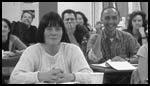
Diploma group photo 1999

The Uncommon Knowledge Diploma in Hypnotherapy and Psychotherapy took place over 6 months this year and we saw some amazing therapy from people who mostly, had little or no prior experience.

The group in the picture (handsome lot don't you think!) have gained their diploma and are now eligible to join the British Hypnotherapy Association, the UK's largest membership organisation for professional hypnotherapists. They have all worked really hard and, in our opinion, deserve a mention.

Top Tip

Think Different

If you have a problem to solve, either personal or work-related, try the following.

1. Sit down and really think about it. Focus on the factors, or people involved; make a list if you like. Think hard about all the ways you could solve the problem logically, including all the reasons you think they would or wouldn't work. Do this until you just can't think of any more.

2. Do self-hypnosis for 20 minutes to half an hour using the body scan from the first weekend or the 3 things induction from the Advanced Hypnosis Weekend.

3. Look out for ideas that 'spring to mind' regarding your problem immediately after your hypnotic session.

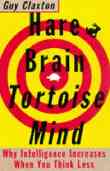
This technique seems to stimulate the unconscious mind to 'think slowly', a type of thinking not practised much these days, as described in this issue's Top Book, 'Hare Brain, Tortoise Mind'.

Startling Statistics

Test subjects were shown puzzles accompanied by misleading clues. The puzzles that they failed to solve were re-presented after a delay and their ability to solve them increased by 30%.

This was regardless of whether they were allowed to think 'consciously' about the problem in the interim. The increase in solution was greater the longer the break. A nice illustration of unconscious 'thinking' and further support for taking Ultradian breaks. (See 'Top Tips' for 'how to think slowly').

You can now download a full self hypnosis session from our site www.self-hypnosis.co.uk. Click here to learn more...

Teaching Tale

The missing ingredient

ONE DAY long ago a wise and experienced physician took on an eager young apprentice who was to learn by observation.

Soon the apprentice observed his first case. A sick man was questioned in great detail by the master who also performed a thorough physical examination.


Teaching Tale contd...

After some time the wise physician said to the man, "You will be pleased to learn that there is a cure for your condition. Now ... let me see ... yes, you will need to consume two in the morning, just after breakfast and one in the evening just before retiring. They can be moist ... but not too moist... fresh, but not too fresh. Consume them on a continual basis for no lesser time than three and a half weeks and maybe drink a little water before consuming them..."

By this time the ill man was quite agitated with anticipation. "Yes wise one and may I ask what it is that I am to consume?"

The wise healer appeared to go into a trance and then, his eyes refocusing, stared deep into the sick man's own eyes. "Certainly", he intoned, "you need prunes".

The man, deeply grateful, followed the prescription carefully. His progress was followed carefully by the young apprentice who noted that the man did indeed recover fully in less than three and a half weeks. The apprentice was deeply impressed and his admiration for his master increased further.

Not long after, another ill man approached the physician and apprentice for help. "May I treat this man as I have already learned much?" implored the apprentice.

The wise healer agreed. So the apprentice sat down with the sick man and listened as he described his symptoms.

The apprentice quickly noticed that his symptoms were almost identical to those of the man who had been cured by taking prunes.

Unable to contain his excitement, he announced "What you need to cure you is prunes!" "What?" shouted the sick man "I think my illness is a little more serious than that!" and stormed out, vowing to never again mingle with such charlatans.

The apprentice turned to his master, totally nonplussed. "Prunes so obviously helped the other man, master. Why did this man reject them as medication?"

The wise physician looked at the younger man and said, "Your prescription lacked a vital ingredient. It is true that prunes were part of the cure, but you failed to give the second man something which was also essential."

"And what was that master" stammered the apprentice, a little embarrassed. "Time!" said the physician. "Both men needed time!"

Hare Brain, Tortoise Mind by Guy ClaxtonTop Book

Hare Brain, Tortoise Mind by Guy Claxton (Click here to read review).

Competition

The first three correct answers 'out of the hat' will win 'Hare Brain, Tortoise Mind', this issue's Top Book. The draw is on January 1st.

(Please note: This competition has now expired!)

Question: How much less per night does the average person sleep compared to 100 years ago?

a) half an hour

b) two hours

c) five hours

Answers in writing or by e-mail to the address overleaf.

Last issue's competition asked "When we become highly emotional, a different part of the brain assumes most control. Is this called: a) Emotional overload? b) Nervous breakdown? c) Emotional high jacking?

The answer was c) and the three winners to each get a copy of 'Emotional Intelligence' are Leela Baksi, Ross Agnello and Angela Main.


Uncommon Quotes

"Sometimes I sits and thinks, but mostly I just sits." attrib. English Yokel

 
Uncommon Knowledge Ltd, 112 Hollingbury Park Avenue, Brighton, England, UK BN1 7JP
Tel: +44 (0)1273 557799 Fax: +44 (0)1273 558890 Email: info@uncommon-knowledge.co.uk
Emotional Intelligence, NLP and Hypnosis Training and Products
All graphics, logos, and articles are Copyright © 98-11 by Uncommon Knowledge or by their respective owners. All rights reserved.