The Primal Human Needs - A New Framework for Happiness
What nature says you need to lead a satisfying, productive, and happy life
Would you wonder why a plant was wilting if it didn't have water or sunlight?
Would you take your car to the mechanic before checking it had fuel in its tank and air in its tyres?
Of course not, so why is it that we forget what we need to be happy?
As well as the obvious 'basic needs' for water, food and shelter, humans have a set of basic needs which are not so obvious, but just as essential to emotional wellbeing.
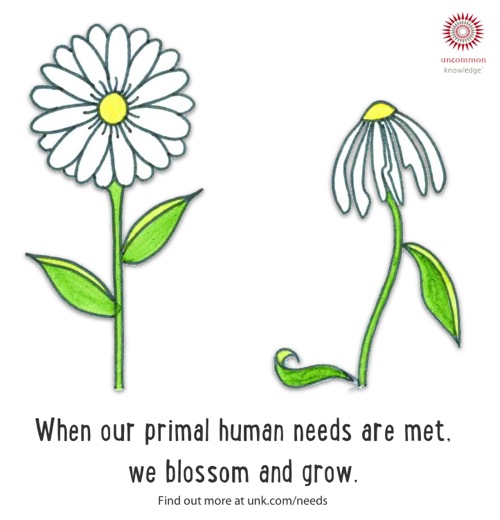
That's why we at Uncommon Knowledge & Hypnosis Downloads talk a lot about the Primal Human Needs. These fundamental needs (an understanding from Human Givens psychology) are, all too often in modern western culture, not treated with the attention they deserve.
When these needs go unmet for too long, we can suffer anxiety, depression, addiction, or some other emotional problem. And because this develops over time, it can be easily overlooked, leaving us confused about why we've got this problem.
To make matters worse, many people aren't always aware they have these needs or how they affect their well being, so here's our 'troubleshooting checklist' of the 9 Primal Human Needs. Knowing them and ensuring you meet them healthily, at least most of the time, will transform your life.
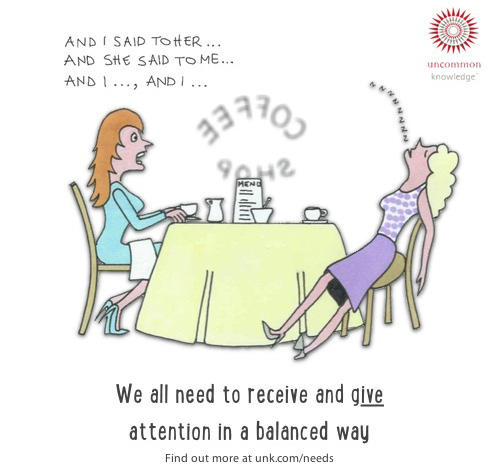
1. The need to give and receive attention
Too much isolation can drastically affect our mental condition, emotional state, and behaviour. We all need, to varying degrees, regular quality contact with other people.
Ideas for how to meet this need:
- A balanced social life is the best way to meet these needs. Make sure you meet up with a friend at least twice a week.
- Resolve to talk twice as much about the person you are talking to compared to how much you talk about you.
- Remember your social skills and interpersonal skills.
- If shyness is getting in the way of getting your attention needs met, try the Overcome Shyness download or the Conversation Starter download.
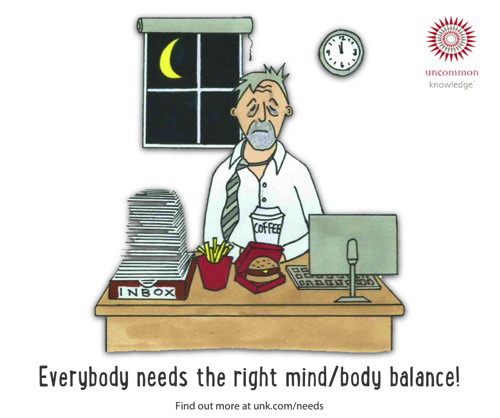
2. The need to heed the mind/body connection
People increasingly treat themselves as machines. We work through lunch, sleep too little, eat junk on the run, skip the gym, and prop up our flagging bodies with 'energy drinks'. But neglecting proper nutrition, sleep, rest, and exercise long-term leads to psychological problems and stress-induced illness.
Ideas for how to meet this need:
- For one week, get to bed early enough to enable 9 hours of sleep - see how you feel.
- Regularly walk more.
- If you are lacking energy and vitality, for one month follow a paleolithic-style diet to see if you are one of the people for whom anti-nutrients in grains are a problem.
- After checking with your doctor, do one short session of really hard work per week (High Intensity Training), whether that's weights-based or cardio.
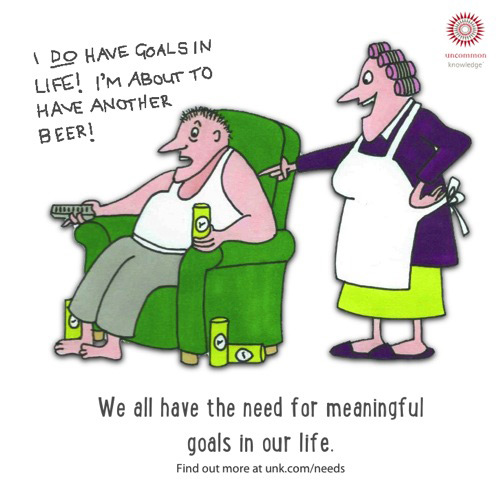
3. The need for purpose, goals, and meaning
Humans have an innate ability to identify, analyze, and imaginatively solve problems. If a person is deprived of the satisfaction that comes from achieving goals or fulfilling a purpose, the imagination can start to create problems of its own.
We need to be working towards something. This enables your imagination and expectation to adopt the attitude of hope rather than avoidance or fear.
Ideas for how to meet this need:
- Take a step back and think about the sort of things you want to achieve.
- If you're struggling with that, try the Find Your Passion download.
- When you decide what to do (climb a mountain, start your own business, write a book, etc.), then strive towards it.
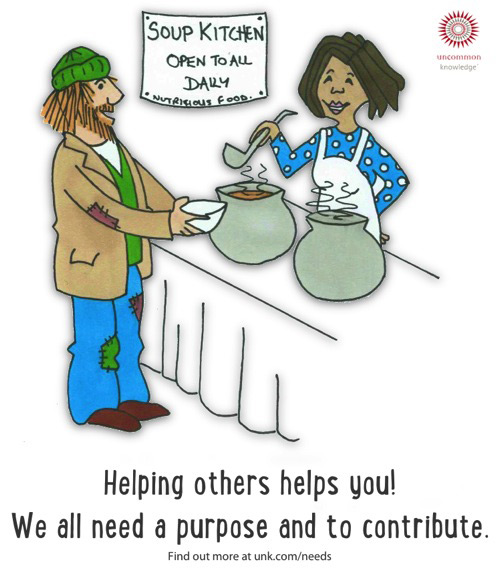
4. The need for community and making a contribution
This basic need gives us a reason for being, over and above our own personal needs, that has been shown to benefit the immune system, mental health, and happiness. Anything that takes the focus off the self will achieve this, whether it's religion, clubs, or charity work.
Ideas for how to meet this need:
- Go to your local volunteer centre, if you have one, and look at the things you can get involved in.
- Find something that you think is wrong in your local community and start talking to people about how you could fix it!
5. The need for challenge and creativity
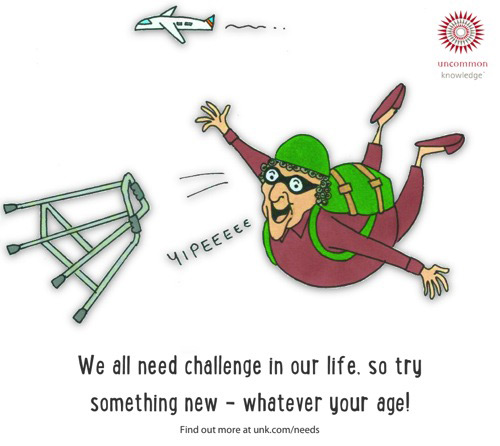
Try something new. Explore. Learn. Improve an existing skill. Without a sense of progress and achievement, we can come to feel worthless, like there's no reason for our existence. Boredom can rear its ugly head and make life feel flat. We all need to be stretched (but not stressed).
Ideas for how to meet this need:
- Take a step back and think about the sort of things you used to enjoy before you got too busy to bother.
- Take a class in something you've never done before. If you haven't done formal learning for a while, it's scary, but everyone else will be in the same boat! Try new things.
- Start a new hobby or pick up an old one again (like playing the piano).
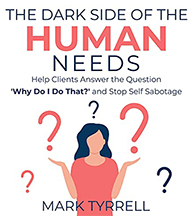
The Dark Side of the Human Needs
To understand what happens when the Primal Needs go wrong, read The Dark Side of the Primal Emotional Needs on Kindle (also available on Audible).
6. The need for intimacy
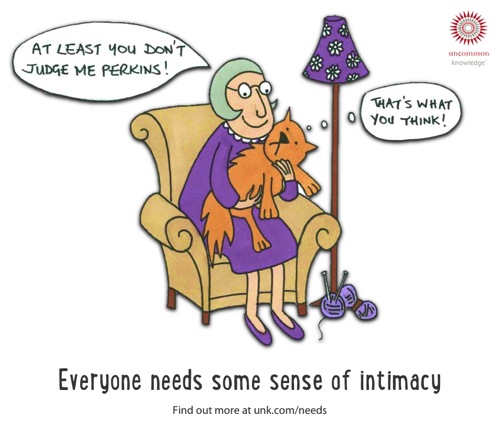
We all need at least one person with whom we can share our ideas, hopes, and dreams. Some people are able to fulfil this need by talking to a loved pet, but most of us need a small circle of loving and supportive friends and/or family.
Ideas for how to meet this need:
- Make a weekly date with your significant other (if you have one) where conversation topics such as work, money, or the kids are off-limits. Discuss your hopes and dreams with each other.
- Try the Emotional Intimacy download.
- Make sure you meet up with a loved one at least once a week for lunch/walk in the park/movie night.
- Talk on the phone or video call with family and friends if they are far away.
7. The need for control
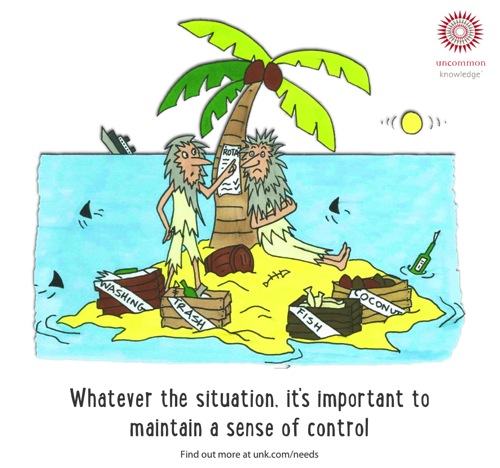
From survivors of torture to survivors of layoffs, those who are able to maintain a sense of control somewhere in their life fare the best, so having a variety of interests and activities is important.
Ideas for how to meet this need:
- If everyone around you is losing their heads, and you are too, one way to get back control is to relax and get some perspective. Internal control can be just as (if not more) important than external control.
- If some things are out of your control and it is causing you stress, try focusing on what is within your control, such as your health and fitness.
8. The need for status
It's important to feel important, and we shouldn't be ashamed to have this desire. Status means different things to different people and isn't just met through paid work. For some, feeling recognized for being a good grandmother, parent, son, or daughter might be enough. Much disruptive, problematic behaviour may be a misapplied attempt to meet this need for recognition.

Ideas for how to meet this need:
- Bear in mind that although you may think you have no worthwhile attributes, this has never happened in the history of humanity. Try the downloads in the self esteem section to see if something there can help you be more realistic about your value.
- Start doing something helpful in your local community.
9. The need for safety and security
To varying degrees, we all have some need to feel safe and secure in life.
When our environment feels insecure, unpredictable, or even dangerous, then - not surprisingly - our mental health can suffer. This need is affected by financial security, health, physical safety, and how well we're fulfilling our other basic needs.

Ideas for how to meet this need:
- Sit down and think about where your lack of security is coming from. Is it your environment? Is it a particular person? Did it start after a traumatic event?
- If it's your environment, can you change where you live/work? If not, can you enhance your personal skills of strength and physical ability to make you feel safer?
- If it's a particular person, decide whether it is worth feeling this way every day with them around or whether you might be better off cutting ties. Resources include the Abusive Relationships download and End that Relationship.
- Listen to Feel Safe to teach your unconscious mind to be less anxious.
- If you have been traumatized, see a good practitioner trained in the Rewind Technique, a quick and comfortable detraumatization method.
Many eggs, many baskets
Who on earth has time to meet all these needs fully? Well, fortunately you can meet your Primal Human Needs by introducing only a few basic changes in your life. That's because one activity can meet many needs.
- Charity work could fulfil 1, 3, 4, and 5, while contributing to 6 and 7.
- Walking with a friend might go towards 1, 2, 3, 5, and 6.
It's also really important to make sure each need is met by more than one activity.
Losing your job can be demoralizing. But if your need for status is met by your job and your volunteer work in the community, then if you do lose your job, you won't feel quite so crushed.
Relationship break-ups can be tough. But if your need for giving and receiving attention and intimacy only comes from your romantic partner, then a break-up will leave you feeling much more wounded.
Assess your own Primal Human Needs here
To understand what happens when the Primal Needs go wrong, read The Dark Side of the Primal Emotional Needs here.