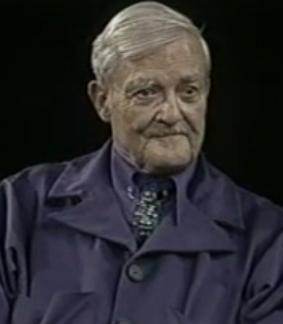
Milton Erickson's approaches are so effective because they are grounded in universal principles of psychology.
A teenage boy finds his burly father desperately trying – and failing – to push a reluctant cow into their barn. The young lad, weak from a recent bout of polio, comes up behind the recalcitrant cow and firmly tugs on its tail. The cow immediately heads in the opposite direction…into the barn. Problem solved.
That farm boy was Milton Erickson, arguably the greatest psychotherapist in history. He never founded a school of therapy and many of his therapeutic interventions defied categorization, but ‘Ericksonian hypnosis’ is the name commonly given to the particular style of hypnotherapy he used and taught. I like to think of Erickson as more of a discoverer than an inventor.
Prefer to watch instead?
Ericksonian hypnosis is more than ‘Ericksonian’
We don’t talk of ‘Newtonian gravity’. Newton did not invent gravity. What he did was identify, explain, and use the phenomenon that was already there, all around us. Ericksonian hypnosis approaches have proved so effective because they are grounded in universal principles of psychology that are common to every one of us.
If you want to sum up Erickson’s approach, you could hardly do better than to call it ‘targeted intervention based on clear perception of the current needs of a unique individual‘. He had no rigid protocol other than to pay close attention to the person in front of him and work out what would best suit that person’s needs.
This called for acute insight and total flexibility. He was a master of the ‘surprise solution’ – the universal hypnotic principle by which a sudden shock triggers the orientation response and makes us wide open to suggestion and learning. And he always knew what to suggest at that critical moment!
A shock is as good as a change!
Erickson was once treating a young woman who, convinced that her (perfectly normal-sized) feet were too big and ugly, stopped going out at all. Erickson engineered a home visit to the woman’s sick mother (he was also an MD) and, while there, ‘accidentally on purpose’ stepped back on the young woman’s foot.

FREE Reframing Book! Just subscribe to my therapy techniques newsletter below.
Download my book on reframing, "New Ways of Seeing", when you subscribe for free email updates
So how do you ‘do’ Ericksonian hypnosis?
1. Focus on the bigger patterns behind the technique
When you can see what’s needed, you don’t need to theorize or over-complicate.
We teach therapists and counsellors the ‘Rewind Technique’, a very reliable and comfortable way to free people from their traumas and phobias. We are always careful to teach the principles behind this technique. This ensures that, if there is a need, the principle can still be effectively applied even if the process used might not even be recognized as ‘rewind technique’ by a casual observer.
Learn about psychological principles so that you can focus on the bigger patterns that transcend rigid techniques.
2. Use the awesome power of implication
Erickson knew the difference between just telling somebody something (which can easily be rejected) and making them feel something new.
The unconscious mind is hard-wired to respond to subliminal stimuli through implication. For example, you can get someone feeling more relaxed without giving a single direct suggestion. Implication does it all:
“When people start to relax deeply… they really begin to feel more comfortable… and when they do… they… notice the breathing… just… begin… to… slow… down…“
You are just talking here about ‘other people’, not the person in front of you. But we all unconsciously associate to ‘other people’…
3. Take what you’re given
Have you ever noticed how some therapists love to sprinkle their talk with jargon? Erickson was much more interested in learning about the language, interests, idiosyncrasies, and idioms of his patients rather than confusing or intimidating them with jargon concepts like ‘time lines’ and ‘inner child’ and all the rest of it. Jargon has its place, of course, but that place is probably not the therapy room!
Instead, Erickson was a master of ‘utilization’. Putting effort into really finding out about the patient allowed him to ‘talk the talk’ of his patient and creatively form his approach around their current reality.
For example, Erickson created a highly effective hypnotic induction based on how tomatoes grow for one patient who was in severe terminal pain. He had found out that the man had been a keen gardener and was particularly proud of his tomatoes, and this analogy worked for him because of the personal association.
So, to a soccer fan, we might talk about their ‘goals’ or how we can ‘kick off’ with a little relaxation so they can really start to ‘get on top of their game’. To a computer programmer, we may talk of ‘updating’ their mind to ‘run more smoothly’. But you won’t be able to do this unless you spend time learning the ‘jargon’ that matters to your client.
‘Ericksonian’ problem-solving existed before Milton Erickson came on the scene. Use these principles to transcend the limits of theory and increase your therapeutic and hypnotic effectiveness and creativity.

FREE Reframing Book! Just subscribe to my therapy techniques newsletter below.
Download my book on reframing, "New Ways of Seeing", when you subscribe for free email updates

About Mark Tyrrell
Psychology is my passion. I've been a psychotherapist trainer since 1998, specializing in brief, solution focused approaches. I now teach practitioners all over the world via our online courses.
You can get my book FREE when you subscribe to my therapy techniques newsletter. Click here to subscribe free now.
You can also get my articles on YouTube, find me on Instagram, Amazon, Twitter, and Facebook.